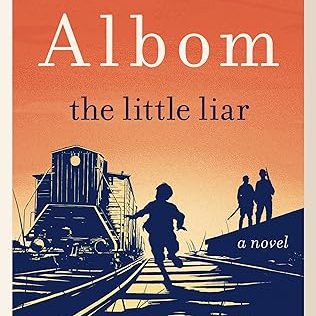
Grab a Copy
Mitch Albom has written many impactful books that encourage readers to reflect on the nature of humanity, with works like Tuesdays with Morrie and The Time Keeper leading the way. Recently, as I browsed through the Kindle Unlimited library for my next read, I was excited to stumble upon one of his lesser-known books: The Little Liar. I hadn’t heard of it before, and it turned out to be a hidden gem.
When we think of the Holocaust, we often focus on countries in Europe with significant Jewish populations, but I was surprised to learn that Greece was one of those nations—something I hadn’t known before reading this book. The story begins in Salonika, a town in Greece with a rich Jewish history, which was largely wiped out during World War II. Albom’s books often explore the theme of time, so it was particularly poignant to dive into this tragic chapter of history through his narrative.
The novel follows four main characters. Nico, the protagonist, starts as a boy known for his commitment to always telling the truth. However, when he is deceived by the Nazis, he inadvertently breaks his lifelong streak of honesty. He spreads the word among his Jewish community that boarding the trains will lead to safety and security, only to discover that these trains were actually headed to Auschwitz. Alongside Nico, we follow his brother, Sebastian, their childhood friend Fannie, and a Nazi officer named Udo Graf. I appreciated the contrast in perspectives, with the story weaving together the experiences of three Jews and one Nazi.
In classic Albom fashion, the narrator is introduced simply as “Truth” until a surprising twist at the end reveals that it was one of the four characters all along. It’s a clever and unexpected turn that left me reflecting on the nature of truth throughout the story.
Historical fiction is a powerful medium for representing significant world tragedies like the Holocaust. Albom uses the symbolism of “the wolf” to refer to Hitler, emphasizing the inhumanity of the regime. He skillfully weaves a fictional narrative around this real-world atrocity, creating a gripping story that remains respectful and educational. This is a style of historical fiction I truly admire—one that honors the gravity of its subject matter while delivering a thought-provoking and well-crafted plot.
Do you have any favorite historical fiction novels? I’d love to hear about them in the comments below!




Leave a Reply