Grab a Copy
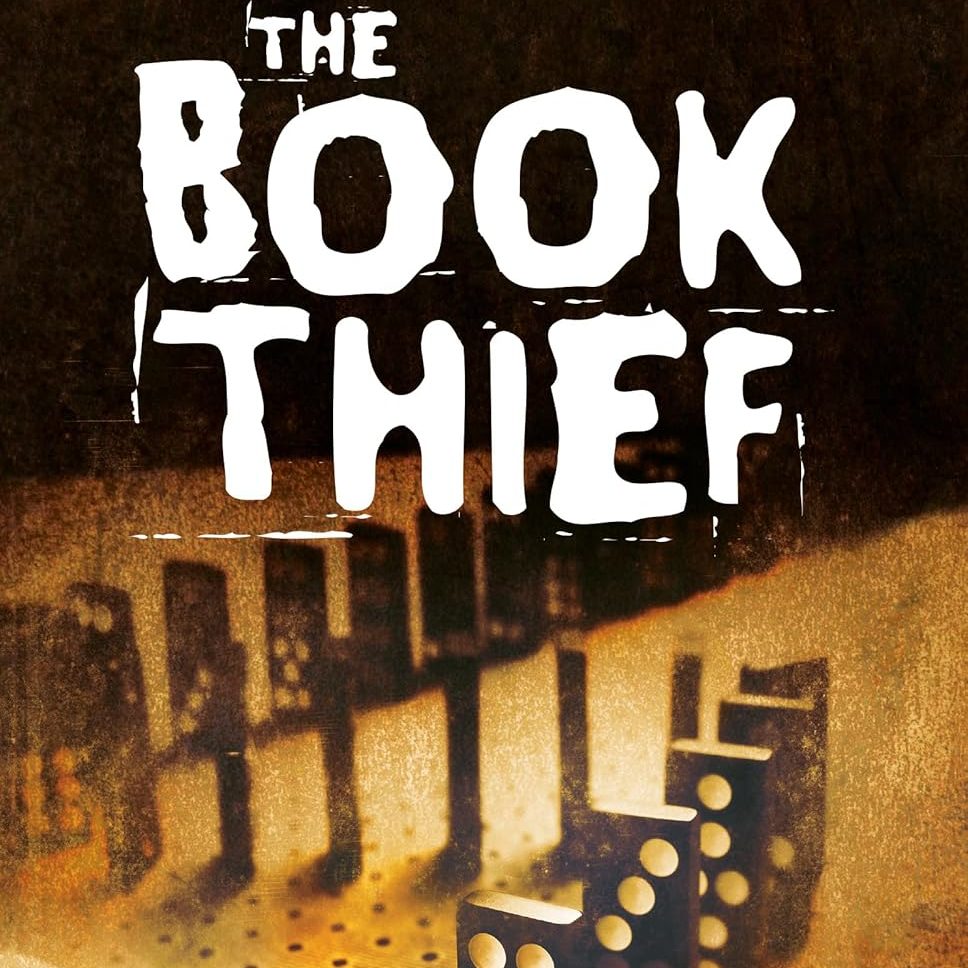
I’ve always loved a good historical fiction novel, and the World War II era, in particular, has produced some of the most powerful stories set amid the chaos of a crumbling Europe. I’ve read many books that fall into this category, but few have hit with an emotional impact as profound as Markus Zusak’s The Book Thief.
Liesel Meminger is placed into foster care in 1940s Molching, Germany, in the home of Hans and Rosa Hubermann. Her biological father was a communist who has been absent for her entire life, her mother can no longer care for her or her younger brother, and her brother dies on the train ride to Molching. When Liesel arrives, she begins settling into her new life with a strict foster mother and a warm, gentle foster father. She struggles in school, unable to keep up with her peers because she cannot read. As the war progresses around them, the story follows Liesel’s coming of age: her foster father teaches her to read, her family hides a Jewish man in their basement, and she forms deep relationships – including falling in love with the boy next door. But (spoiler alert) if you’re looking for a happy ending, this book is going to be uncomfortable for you.
The novel is narrated not by Liesel herself, but by Death, a presence that encounters her multiple times over the course of the story and becomes intimately familiar with her life. This was a fascinating choice on Zusak’s part, and one he executes beautifully. Amid the tragedy and horror of the most destructive war in human history, humanity and the quiet beauty of life still manage to break through the prose.
As Liesel begins writing her own story, we’re reminded of the immense power of words – and of storytelling as a way to reclaim narrative from evil forces, in this case, Hitler and the Nazi regime. We’re shown that words can be both constructive and destructive, and that storytelling itself can be an act of resistance in the face of overwhelming adversity.
It’s easy to read about historical atrocities like the Holocaust in a textbook, buffered by decades of distance. But being immersed in a story that unfolds in real time is a stark reminder of how terrifying the world can become when hatred is allowed to thrive unchecked. What’s even more unsettling is the realization that this kind of evil still exists today. Much of the world turns a blind eye to ongoing violence and injustice because it feels easier (or more comfortable) to look away. Lately, every time I turn on the news, there seems to be more violence, more conflict, more loss, and a growing tendency to ignore it all. That doesn’t feel comforting to me at all. It feels frightening. It feels like warning signs are being ignored.
I believe books have the power to shape the world for the better, and historical fiction like The Book Thief plays an essential role in that mission. We can never afford to forget what has come before. The only way to move forward responsibly is to remember. We are reaching a point in history where Holocaust survivors are running out of time to tell their stories themselves, and it’s vital that those stories never fade. The same is true for children like Liesel – for the German children who were also left behind, carrying the trauma of a world where loved ones were taken in the name of hatred (either to be sent off to camps, or to fight in the war like her father). Reading books like this is one of the most effective ways to pass history down, to preserve memory, and to ensure that these horrors are never repeated.


Leave a Reply