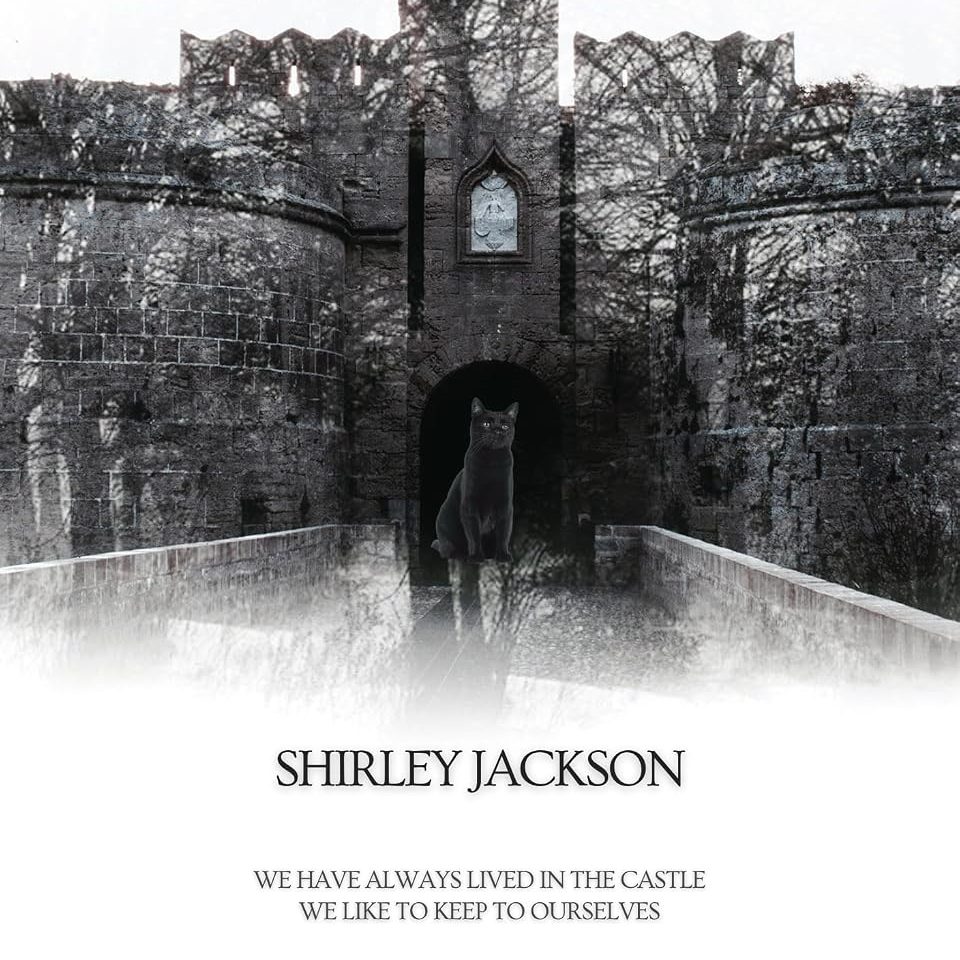
Grab a Copy
I’d always been a fan of horror but never actually read a Shirley Jackson book. I remember reading her short story The Lottery in middle school, and I do have a copy of The Haunting of Hill House that I just haven’t gotten around to yet (although the Netflix series was brilliant, I have heard it’s very loosely based on the original novel). But today I finished We Have Always Lived in the Castle, and I have a lot of thoughts.
First of all, this one is definitely one of the more interesting plot lines I’ve come across. Merricat Blackwood is a young woman living with her sister Constance and Uncle Julian in their old family home several years after the poisoning that killed off the rest of their family – the three of them having survived for different reasons: Uncle Julian barely ate any of the poisoned sugar, Merricat had been sent to bed without dinner that night, and Constance doesn’t eat sugar. Having been the family cook, Constance has been assumed to be the murderer by the whole town despite being found not guilty, and lives a reclusive life, never leaving the home. Merricat goes into town to run all their errands, and pretty early on we learn that her view of reality is… skewed.
It’s a short read – less than 200 pages – so great for when you want to hammer out a whole book in one sitting. With an artistic display of madness and the gradual revelation of just how distorted Merricat’s reality already is, it gets creepier throughout the story and shows how houses become notoriously “haunted.” Without outwardly saying much about it, the book gives off a witchy vibe that feels immersive for autumn.
I know my mother-in-law told me about a film adaptation of this one a while back, so I can’t wait to watch that to see how it compares!
This is a great choice for anyone looking to read something classic and different – so different that it can be hard to describe. The same eeriness found in the DNA of The Lottery shows up in this, and Jackson proves to be a master of revealing the horror in her stories through depiction of detail rather than just telling us directly what is happening, so I can see why she’s such a beloved writer.




Leave a Reply